 AA Global
 The 3 Concepts Every Beginner Trader Needs First (Free Guide)
Key takeaways
- A swing high is a middle candle higher than both its neighbours, flip it for a swing low
- Higher highs and higher lows: bullish. Lower highs and lower lows: bearish
- Structure tells you which direction you are allowed to trade
- A fair value gap is an entry zone left behind by a forceful candle
- Learn all three on a free demo before risking anything
The vocabulary everything else is built on
Learn these three concepts first and every strategy you meet afterwards, including the opening range strategy, will make sense faster. Each image is taken straight from the video.
Concept 1: Swing points
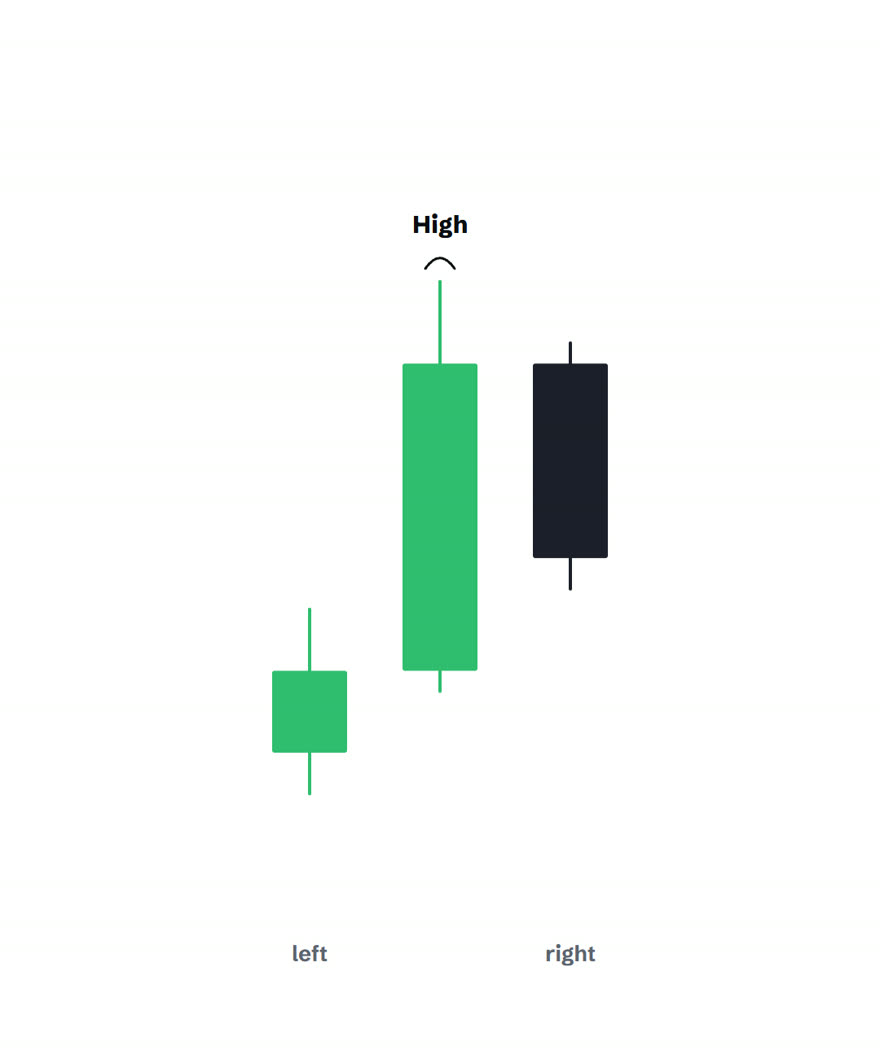
When the middle candle is higher than the candle on its left and the candle on its right, that is a swing high. It is a point where buyers ran out of push.
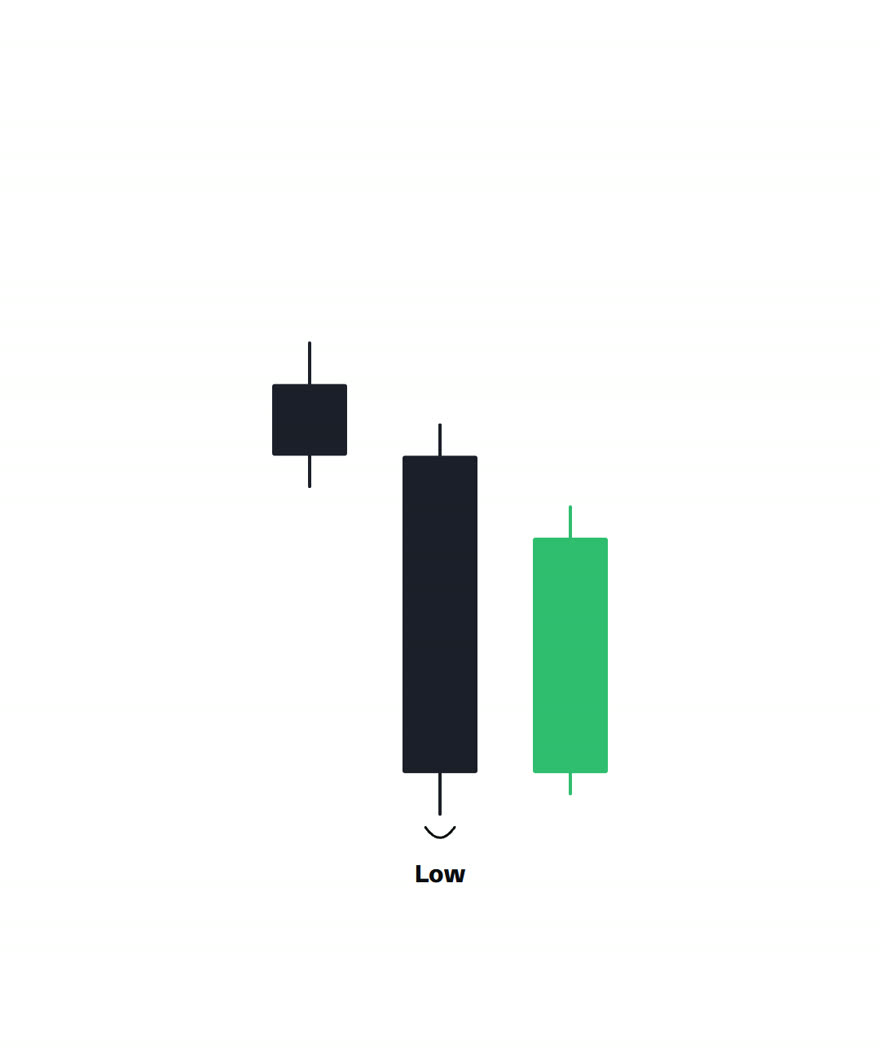
Flip the picture and you have a swing low. These pivots are the raw material for everything that follows.
Concept 2: Market structure
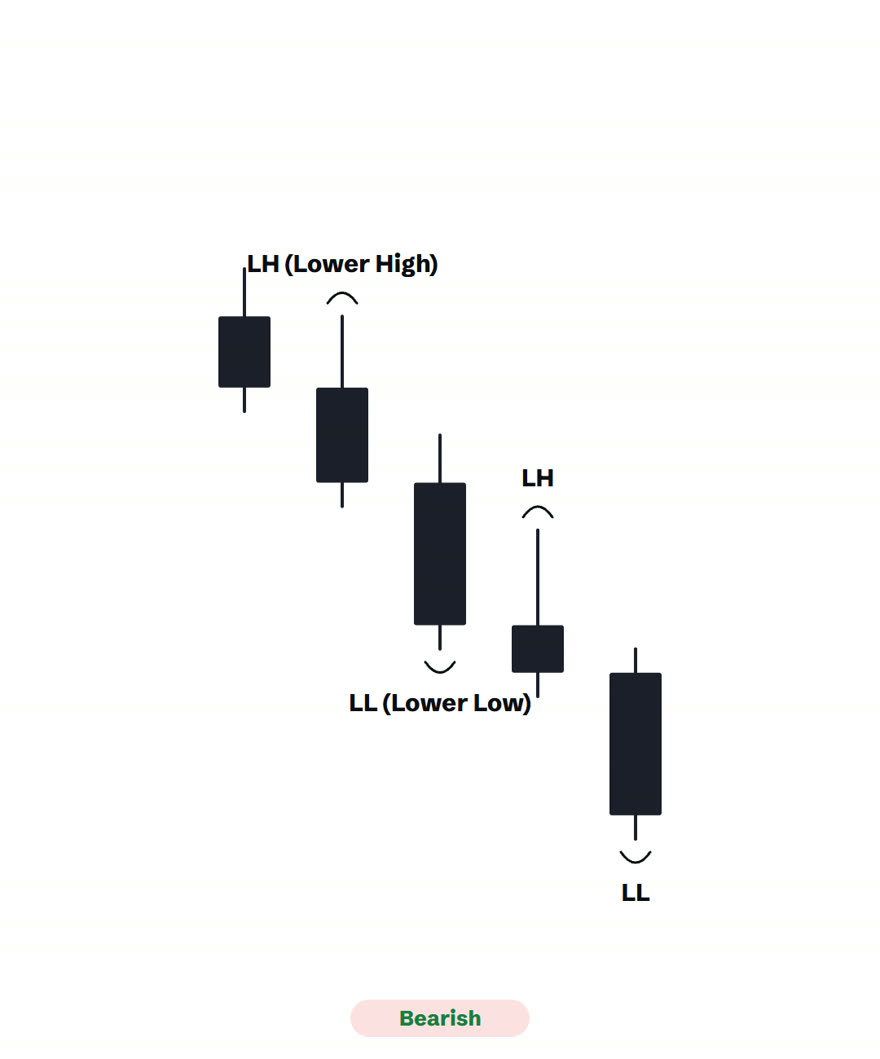
Connect the swings and the chart starts speaking. Lower highs and lower lows mean sellers are in charge: a bearish market.
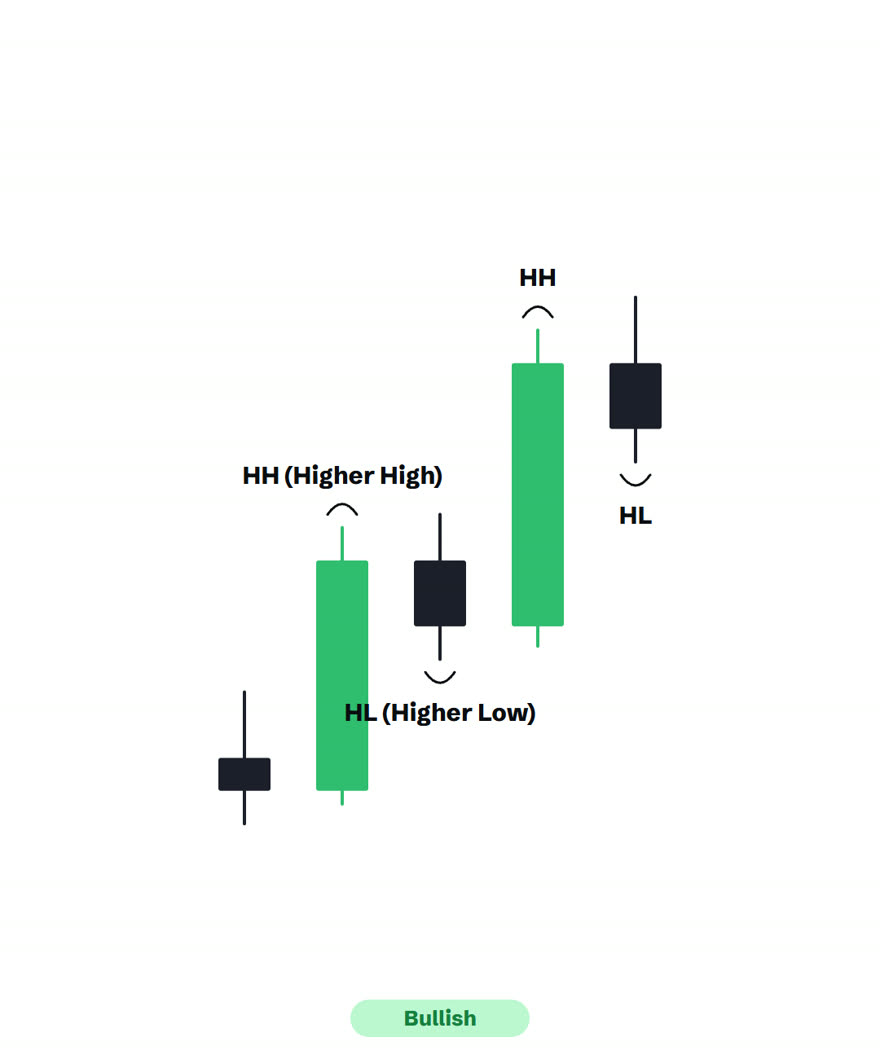
Higher highs and higher lows mean buyers are in charge: a bullish market. Structure is your permission slip. It tells you which direction you should even be considering before you look for an entry.
Concept 3: Fair value gaps
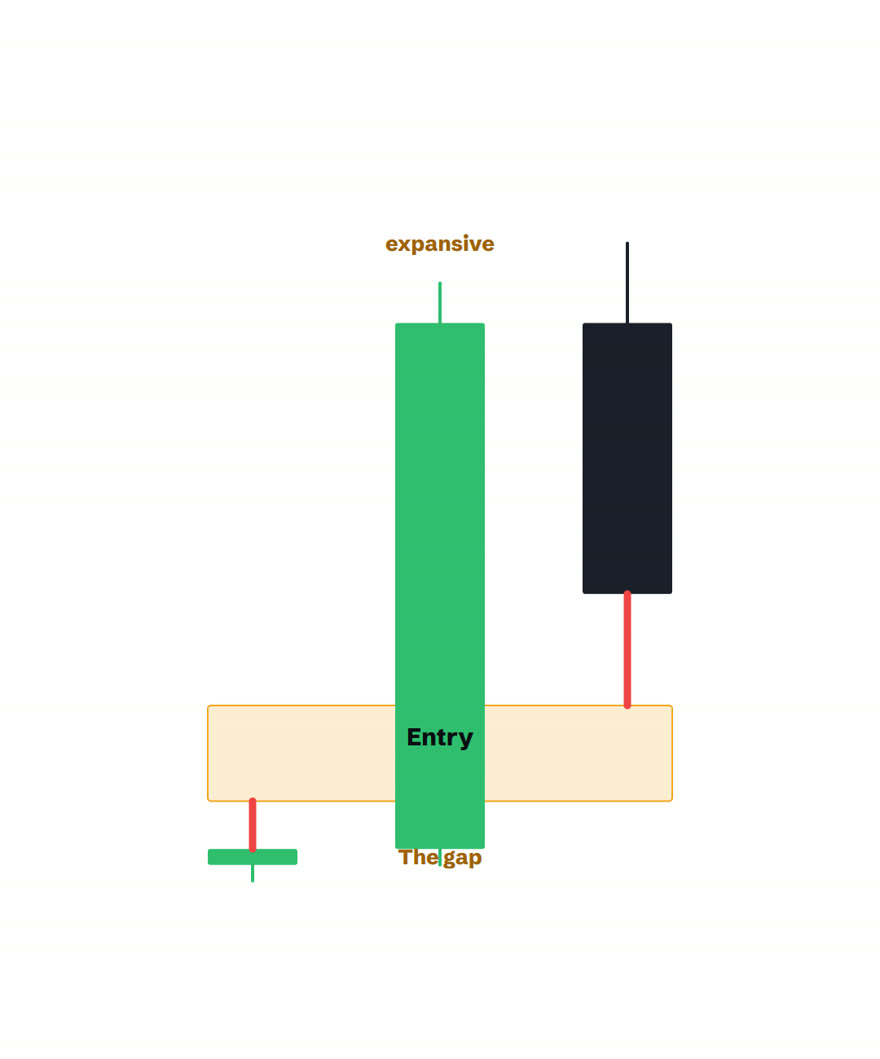
When an expansive candle leaves a gap between the wick before it and the wick after it, that empty zone is a fair value gap. Price often returns to it before continuing, which makes it an entry zone rather than a chase.
Where to go next
That is the foundation. See all three concepts working together in the opening range strategy, practise spotting them on the free entry trainer, and if you want the full ground-up path, the free beginner course covers candles, risk and structure in 20 short lessons.
Try trading free, $10,000 virtual demo →Frequently asked questions
What should a complete beginner learn first in trading?
What is a swing high and a swing low?
What is market structure?
How do beginners use fair value gaps?
Do I need money to start learning this?

Keep learning
New to trading entirely? Start with the free beginner course: 20 short lessons from zero to your first demo trade.