 AA Global
 The Opening Range Strategy: One Candle a Day (Free Guide)
Key takeaways
- Mark the high and low of the first 5 minute candle, those two levels are your whole day
- A break only counts with displacement: a fair value gap through the level
- Wait for the retest of the gap and an engulfing candle before entering
- Stop goes one tick beyond the retest candle, target a fixed 3 to 1
- One trade a day. If the setup does not come, there is no trade
Why boring wins
Most beginners lose because they take ten impulsive trades a day. This strategy allows one. You mark two levels in the first five minutes of your session, and if price never gives you the full setup at those levels, you close the laptop. That discipline is the edge as much as the entry itself.
Every image below is taken straight from the video, so you can follow along frame by frame. The left column shows the 5 minute candle (the FCR, First Candle Range); the right column shows the same five minutes broken into 1 minute candles, starting at the 9:30 tag.
Step 1: Mark the first candle's high and low
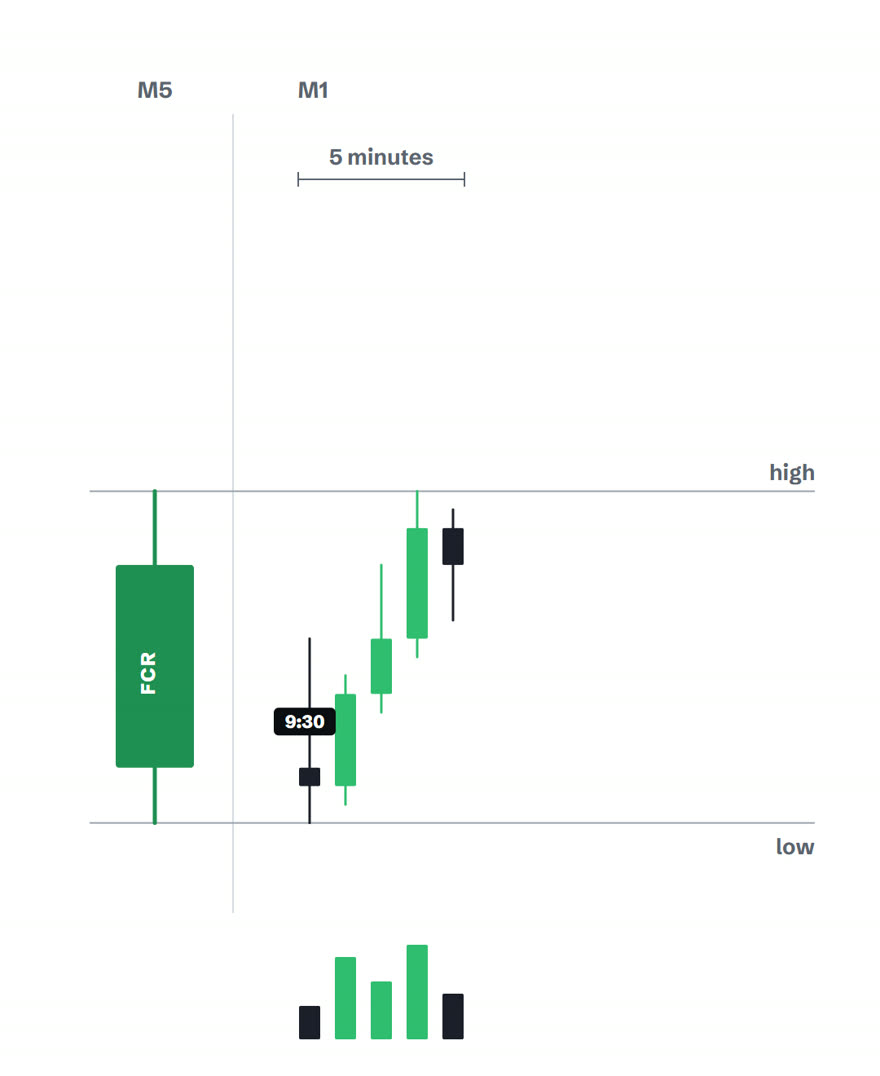
At your session open (9:30 New York for US indices, or your own fixed hour on synthetic indices, which trade 24/7), let the first 5 minute candle finish completely. Mark its high and its low and extend them across your chart. Those are the only levels you care about today.
Step 2: Ignore the fake breaks
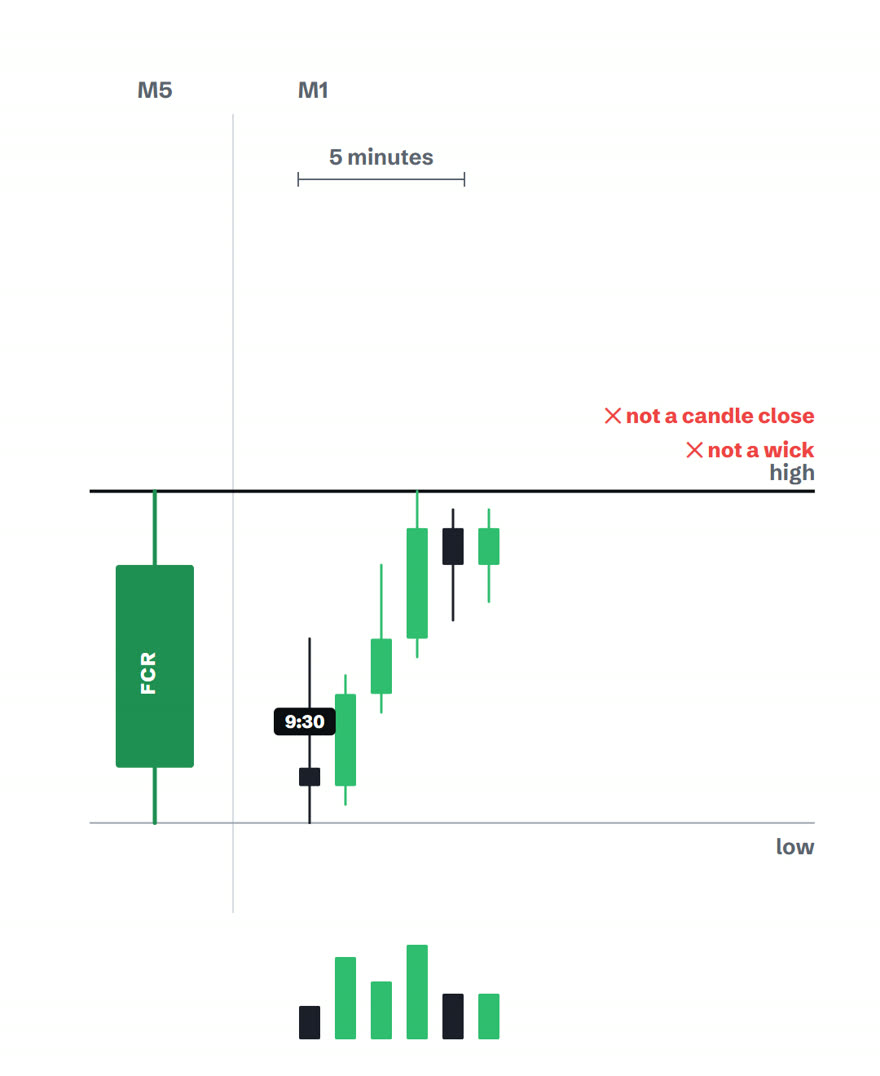
Price will poke at your levels. A touch is not a break, a wick through is not a break, and a candle close beyond the level is still not enough on its own. Price can close through a level and reverse straight back. This is where most people lose: they buy the first poke and get trapped.
Step 3: Wait for displacement
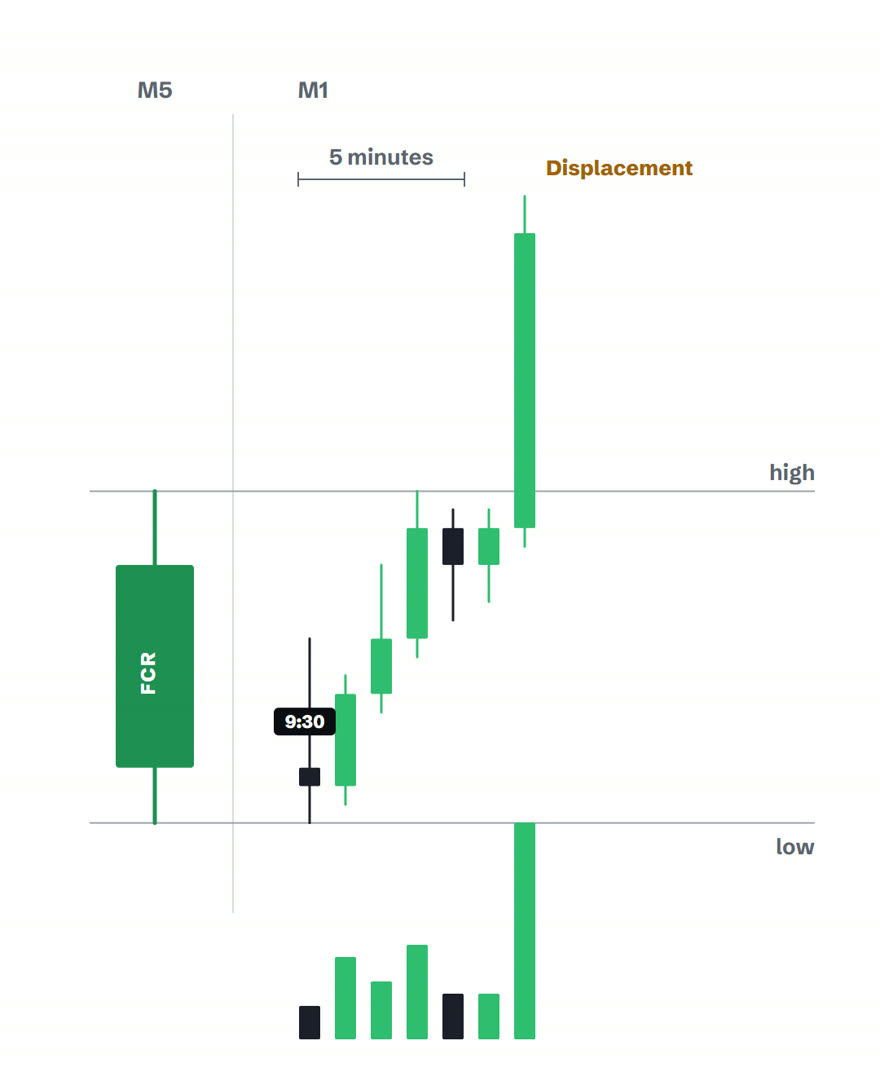
What you want is displacement: an expansive candle that drives through your level with real force. It is the market showing you which side is actually in control, and it is visibly different from the pokes in step 2.
Step 4: Find the fair value gap
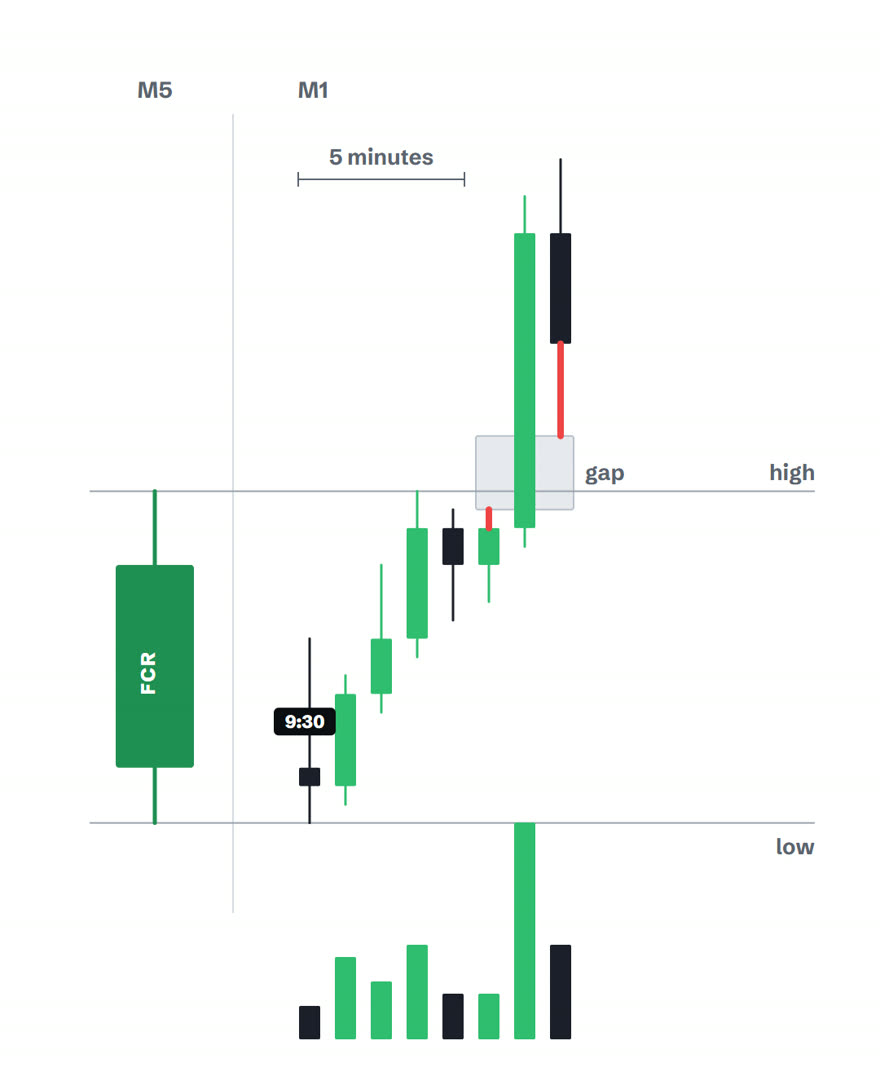
Displacement leaves a footprint: a fair value gap, the empty space between the wick of the candle before it and the wick of the candle after it. When that gap prints through your high or your low, the setup is armed. Now you do nothing and let price come back.
Step 5: The retest and the engulf
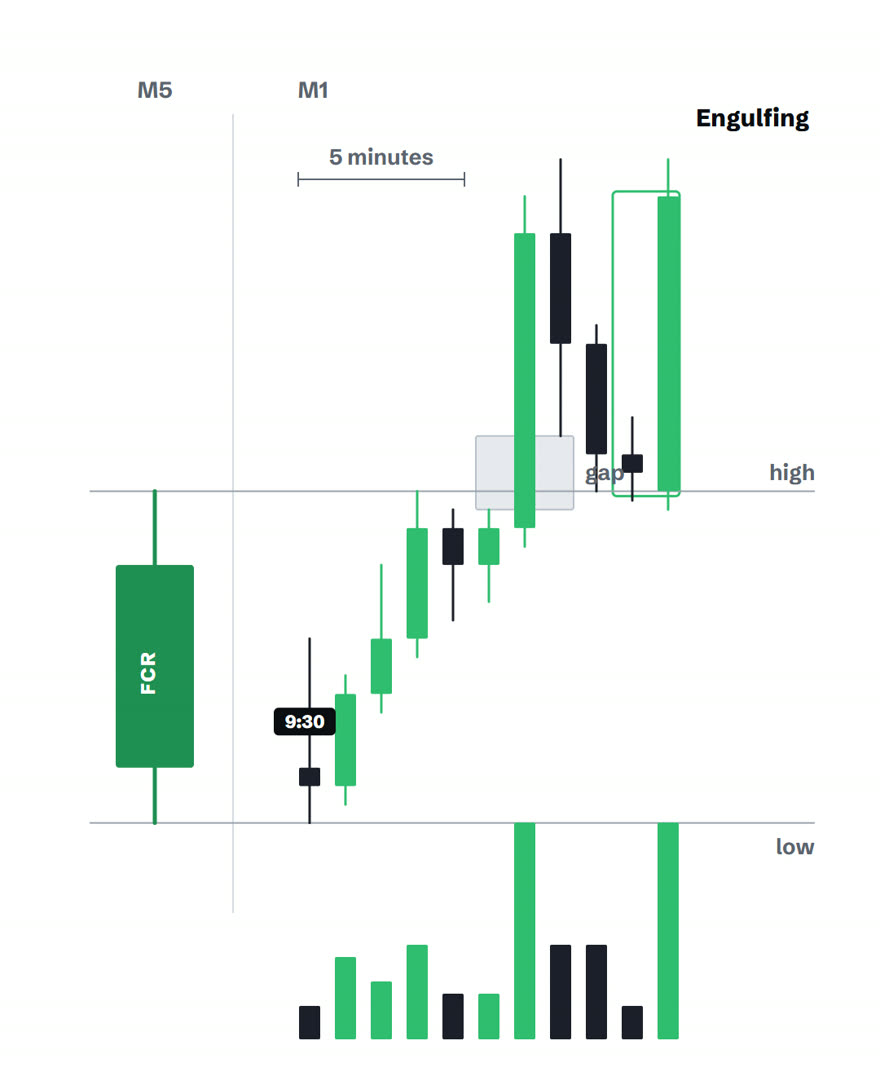
Price almost always returns to retest the gap it left. Let it come. Your trigger is an engulfing candle, one whose body completely swallows the retest candle. That is the market confirming the level has flipped, and that is your entry, at the close of the engulfing candle.
Step 6: Stop and target, fixed, every time
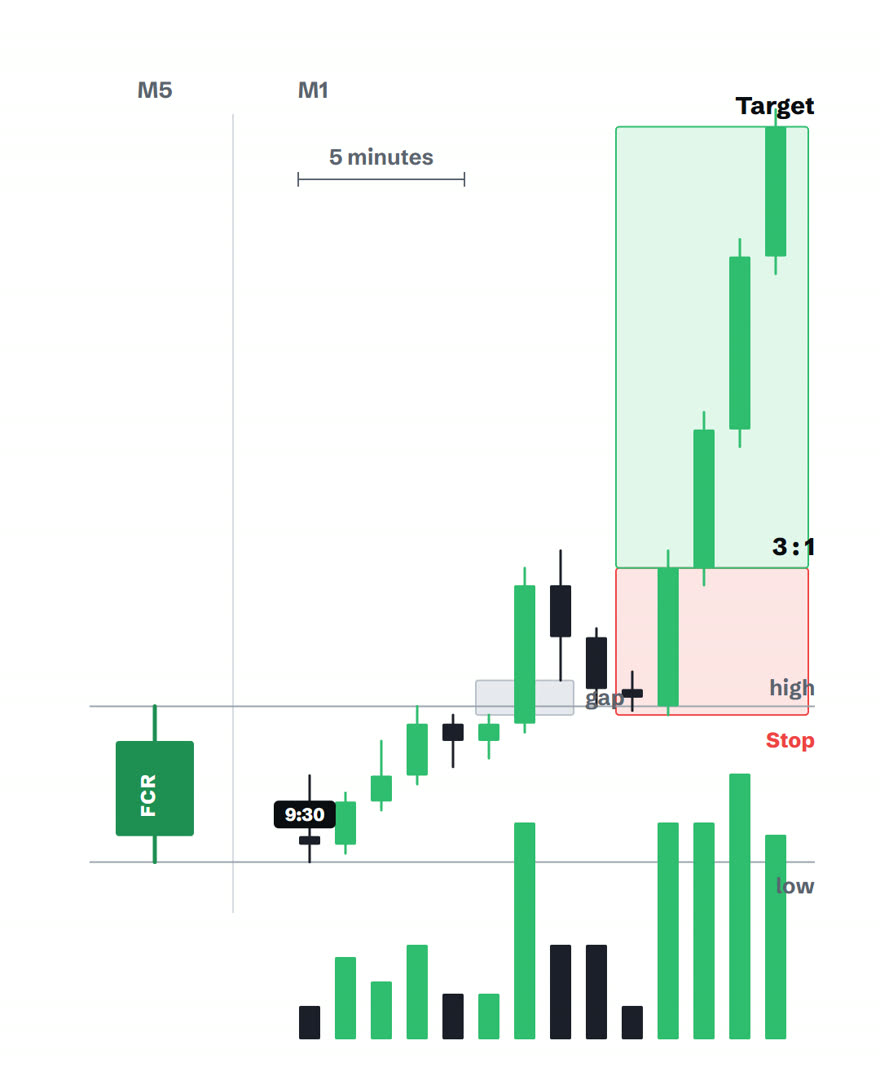
- Entry: at the close of the engulfing candle
- Stop: one tick beyond the retest candle's low (for longs) or high (for shorts)
- Target: exactly 3 times your stop distance. No trailing, no moving, no "just a bit more"
At 3 to 1 you only need to win about 1 trade in 3 to stay ahead of breakeven. That is what lets one boring trade a day compound.
Before you trade it
Run every setup through the pre-trade checklist first, and practise the pattern on the free entry trainer until spotting the gap and the retest is automatic. If you are brand new to charts, start with the free beginner course, it covers candles, structure and risk in 20 short lessons.
Then take at least 20 trades on a demo account before any real money touches the market. The setup is simple; the patience is the hard part.
Try trading free, $10,000 virtual demo →Frequently asked questions
What is the opening range strategy?
What time does the opening range start?
What is a fair value gap?
Why not just enter when the level breaks?
Where does the stop loss go?
Can I practise this without risking money?

Keep learning
New to trading entirely? Start with the free beginner course: 20 short lessons from zero to your first demo trade.