 AA Global
 Trading Sessions Explained: Asian, London and New York (Free Guide)
Key takeaways
- The trading day runs in three sessions, and each one has its own personality
- Asian session: quiet range that builds the levels which matter later
- London: the biggest session, sweeps the Asian range and starts the real trend
- The London to New York overlap (about 13:00 to 17:00 UTC) is the most volatile window of the day
- Want movement, trade London and the overlap. The Asian session is for patience, not action
Why the market goes quiet, then explodes
Ever notice the chart doing nothing for hours, then moving more in twenty minutes than it did all morning? That is not random. The trading day is three sessions taking turns, and each one behaves differently. Once you can see which session you are in, half the confusion disappears: you stop expecting trends from a window that only ever ranges, and you stop sitting out the window that actually moves.
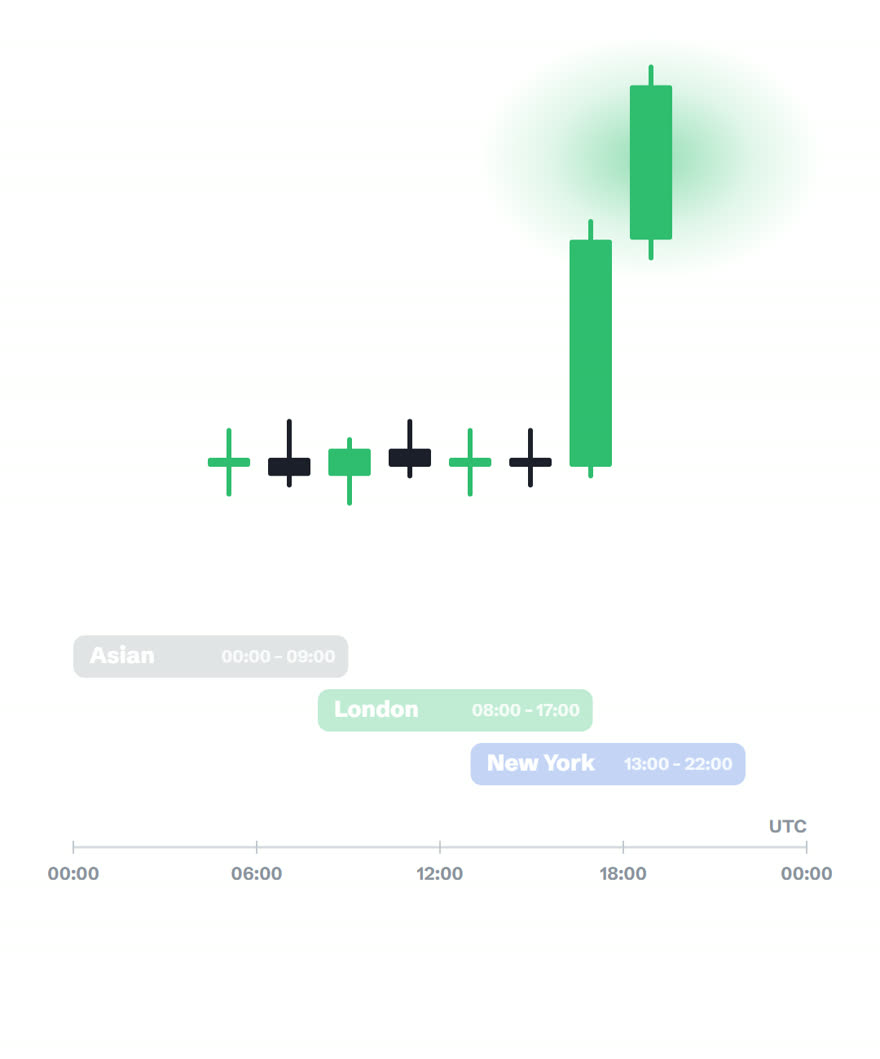
Every image below is a still from the video, so you can follow along frame by frame. All times are UTC; they shift by an hour with daylight saving.
Session 1: Asian, the quiet builder (00:00 to 09:00 UTC)
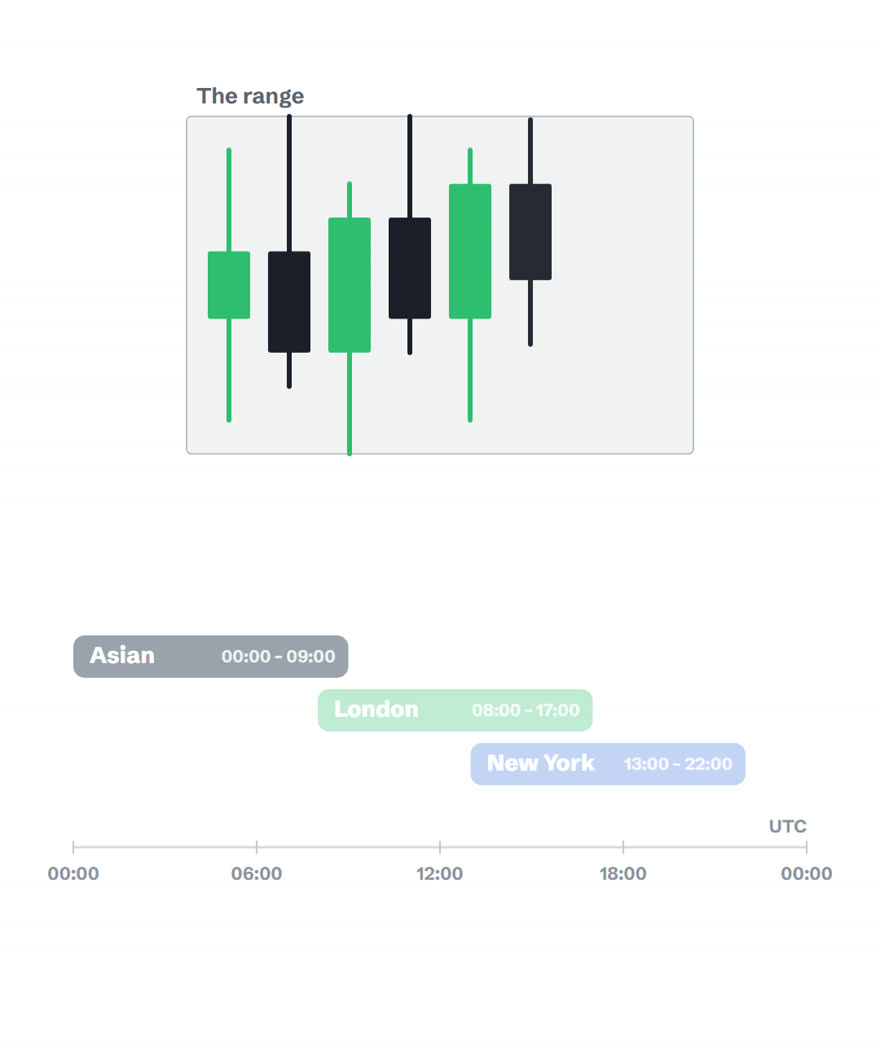
While Tokyo, Sydney and Singapore are the only centres open, volume is thin and price mostly drifts sideways. If you are new, this is the session that tricks you into thinking nothing ever happens, and into forcing trades inside a range that is not going anywhere.
But the Asian session is doing a job: it is quietly building the day's key levels. The high and low of that range collect stops and pending orders, and those orders are exactly what the next session comes hunting for. Mark the Asian high and low, then be patient.
Session 2: London, the trend starter (08:00 to 17:00 UTC)
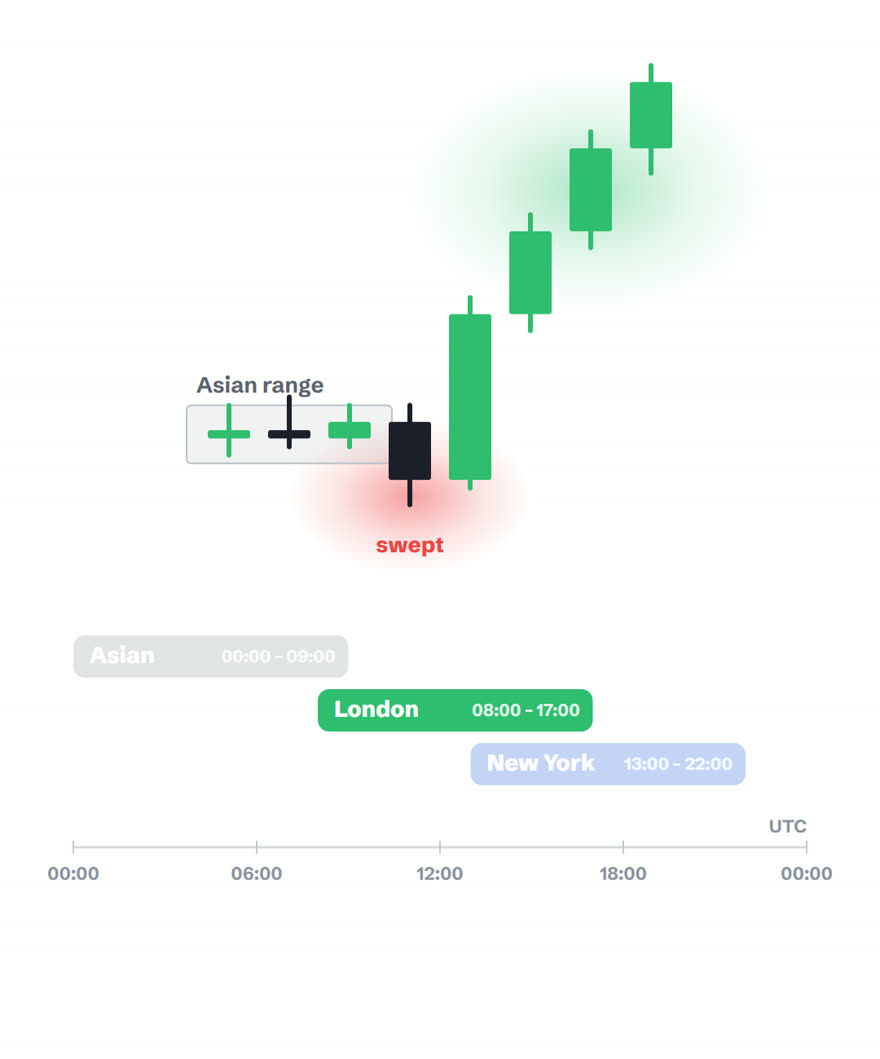
Then London wakes up and everything changes. London is the biggest forex session on the planet, and when it opens the volatility comes alive. Watch what it does with the Asian range: very often the first move is a sweep, a push through the Asian high or low that collects the stops sitting there, before the real trend of the day kicks off in the opposite direction.
That sweep then reverse pattern is the same mechanic as the fair value gap entry: let the fake move happen, then trade the real one. The London open is where that setup prints most reliably.
Session 3: New York and the overlap (13:00 to 22:00 UTC)
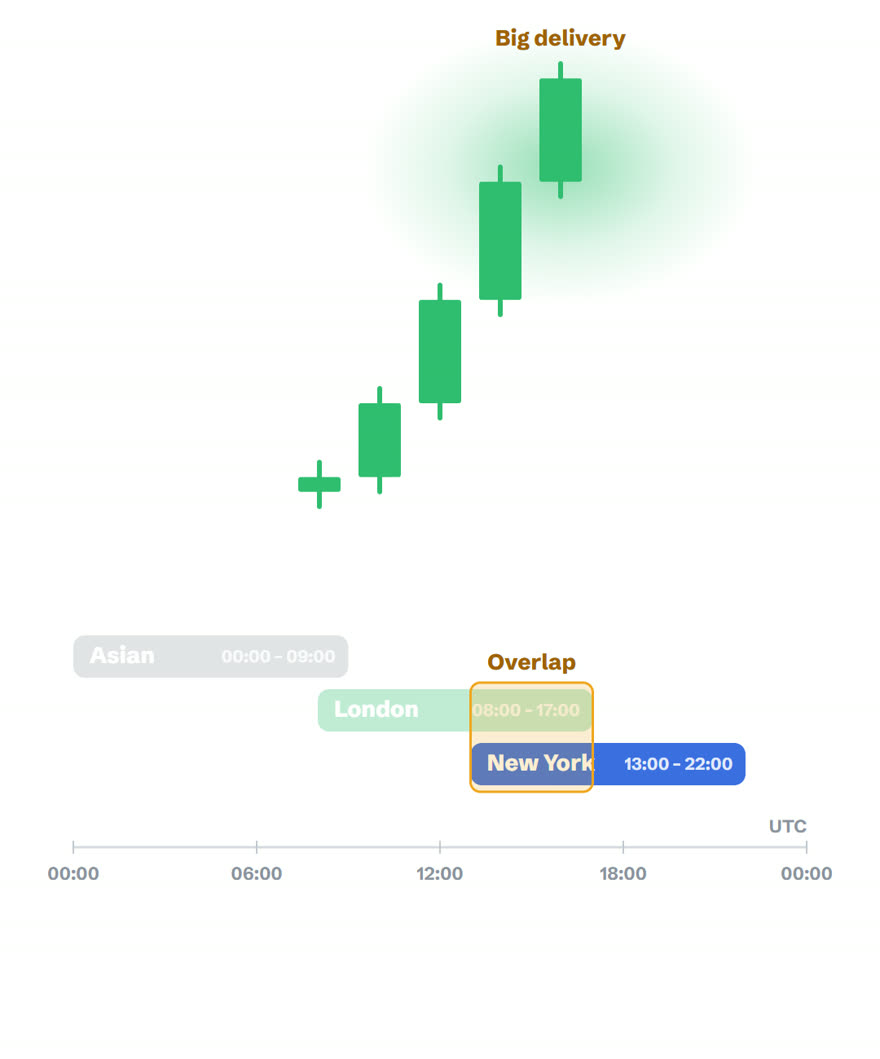
New York opens while London is still going, and from roughly 13:00 to 17:00 UTC both giants are trading at the same time. That overlap is the busiest, most volatile stretch of the entire day: the most volume, the tightest spreads, and the window where the big moves usually get delivered. US news releases also land in this window, which adds fuel; check the calendar before trading through them.
The takeaway: match the session, lose the confusion
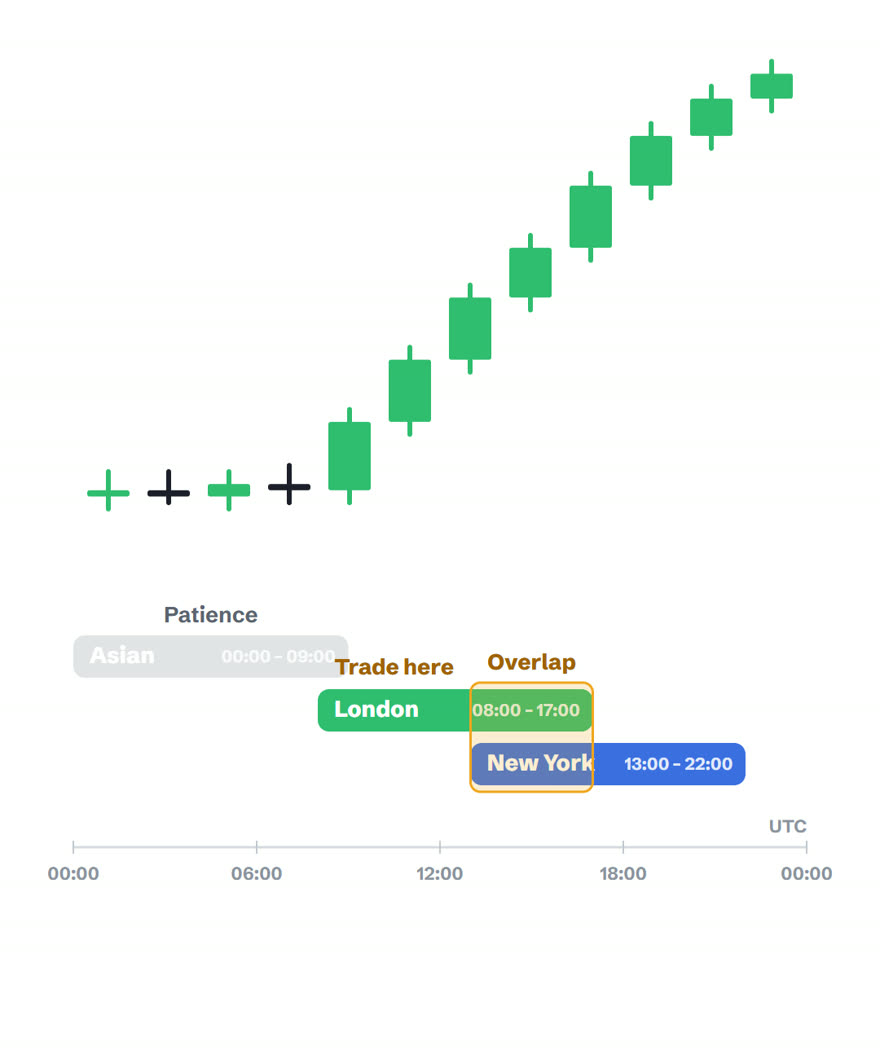
- Want movement: trade the London session and the London to New York overlap
- Asian session: preparation, not action. Mark the range, set your levels, wait
- Late New York (after 17:00 UTC): volume fades, moves get choppy, be selective
- One habit: before any trade, ask which session am I in, and is this window known for trends or ranges
One honest exception: synthetic indices
Sessions matter on forex, gold and index CFDs because they follow real-world volume. Deriv's synthetic indices do not: Volatility 75, Boom and Crash run on a random number generator 24 hours a day, so there is no session pattern to trade there, whatever anyone on YouTube claims. On synthetics, trade the chart pattern, not the clock.
Put it to work
Convert the session times to your own timezone once and write them down. Then open a free demo, pick one session-driven market, and just watch the handover for a week: Asian range, London sweep, overlap delivery. Pair what you see with the opening range strategy, run every setup through the pre-trade checklist, and if candles and structure are still new, start with the free beginner course.
Try trading free, $10,000 virtual demo →Frequently asked questions
What are the three main trading sessions?
Which session is the most volatile?
What time is the London session in my timezone?
Why does the market go quiet during the Asian session?
Do sessions matter on Deriv synthetic indices?
Can I practise session-based trading for free?

Keep learning
New to trading entirely? Start with the free beginner course: 20 short lessons from zero to your first demo trade.