 AA Global
 AMD Trading Explained: Accumulation, Manipulation, Distribution (Free Guide)
Key takeaways
- Every trading day follows three phases: accumulation, manipulation, distribution
- Accumulation is the quiet range, and it is collecting stops above the high and below the low
- The first break of a range is a trap until proven otherwise, never buy the breakout
- The real move delivers opposite the fake one, that is where you want to be positioned
- Entry needs three confirmations in order: the sweep, the structure shift, the gap retrace
The pattern behind every trading day
Every trading day follows the same hidden cycle, and once you see it you cannot unsee it. Price goes quiet and builds a range. Then it breaks out, traps everyone who chased, and reverses. Then the real move delivers in the opposite direction. Quiet, trap, deliver: Accumulation, Manipulation, Distribution. Traders call it AMD, or the Power of Three.
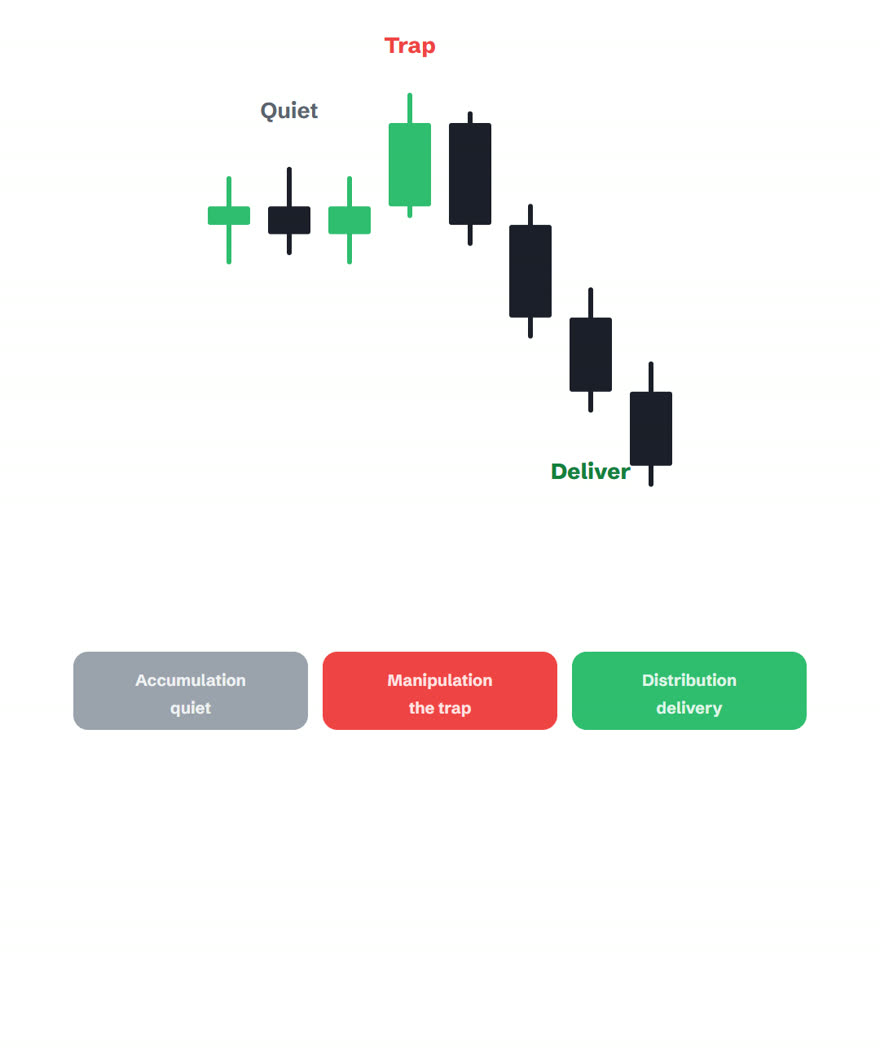
Every image below is a still from the reel series, so you can follow along frame by frame.
Phase 1: Accumulation, the quiet range
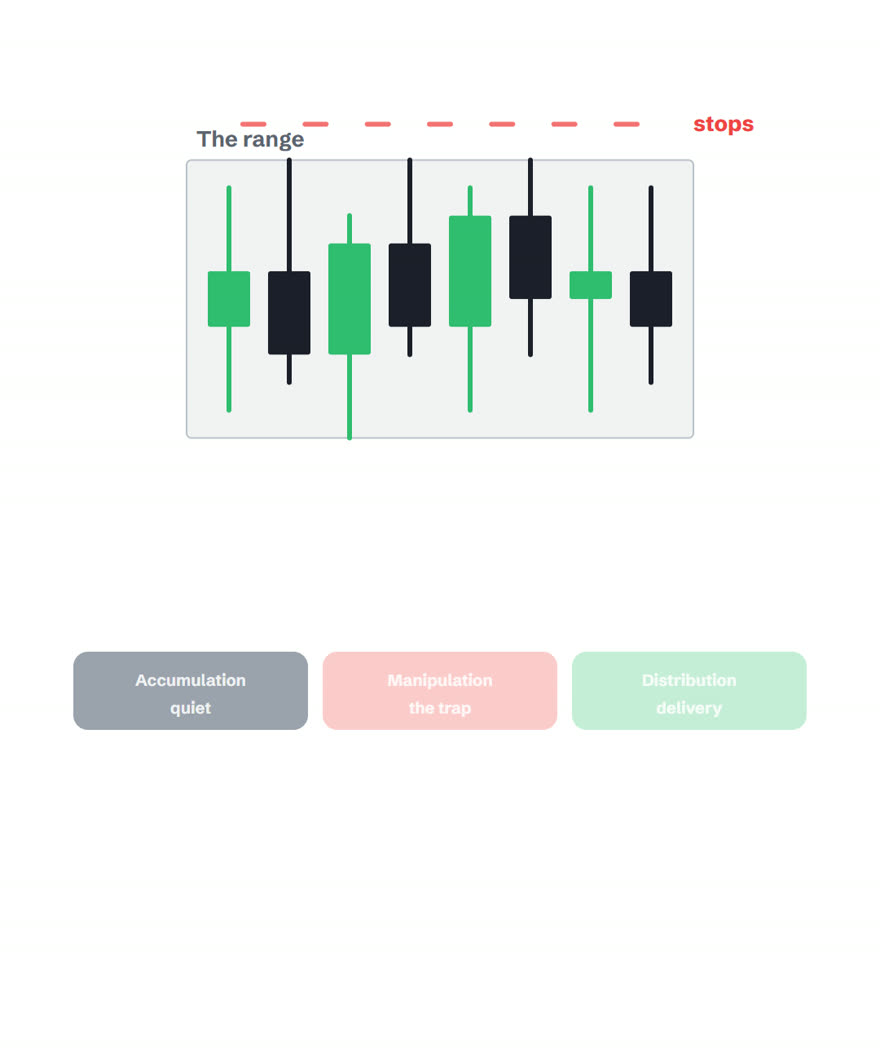
The market goes quiet and drifts sideways. It looks like nothing, but the range is doing a job: every trader who buys the range puts a stop under the low, every seller puts one above the high, and breakout traders park pending orders just beyond both edges. The longer the range holds, the bigger those piles of orders grow. That resting liquidity is the fuel for everything that follows.
Your job in this phase: nothing. Mark the high and the low, and wait. Trading inside the range is gambling in chop.
Phase 2: Manipulation, the trap
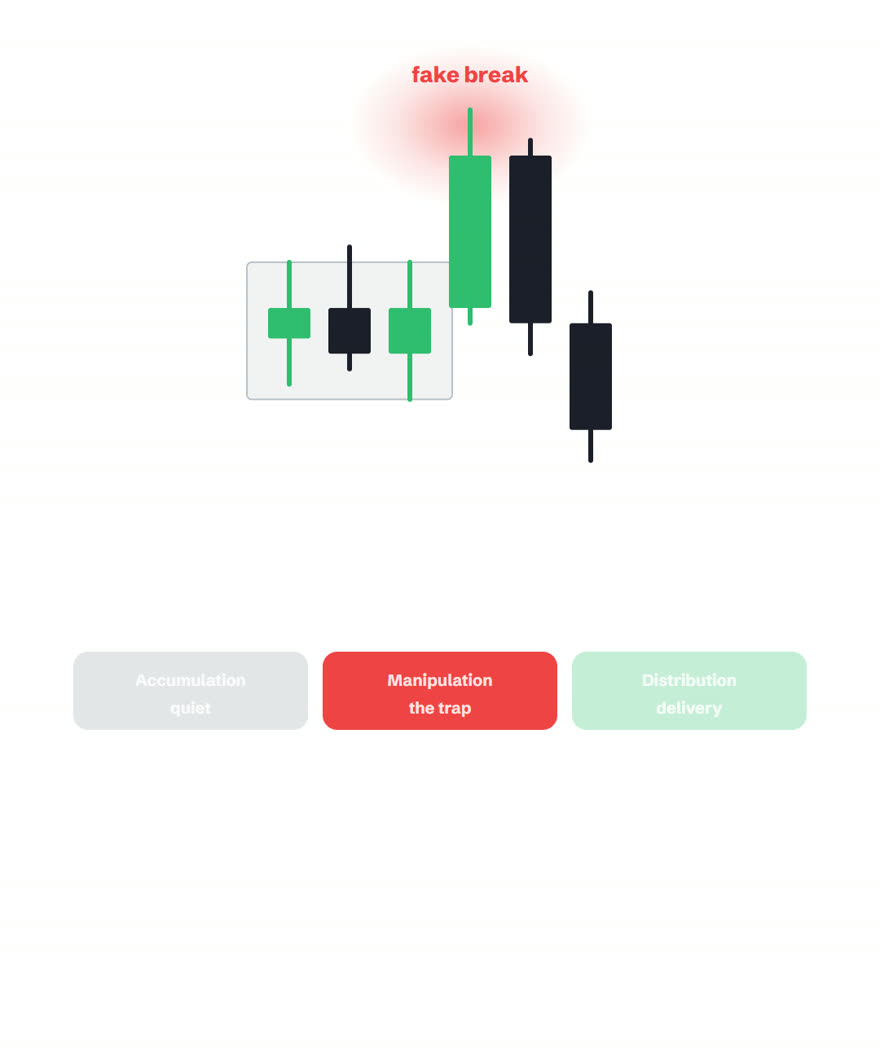
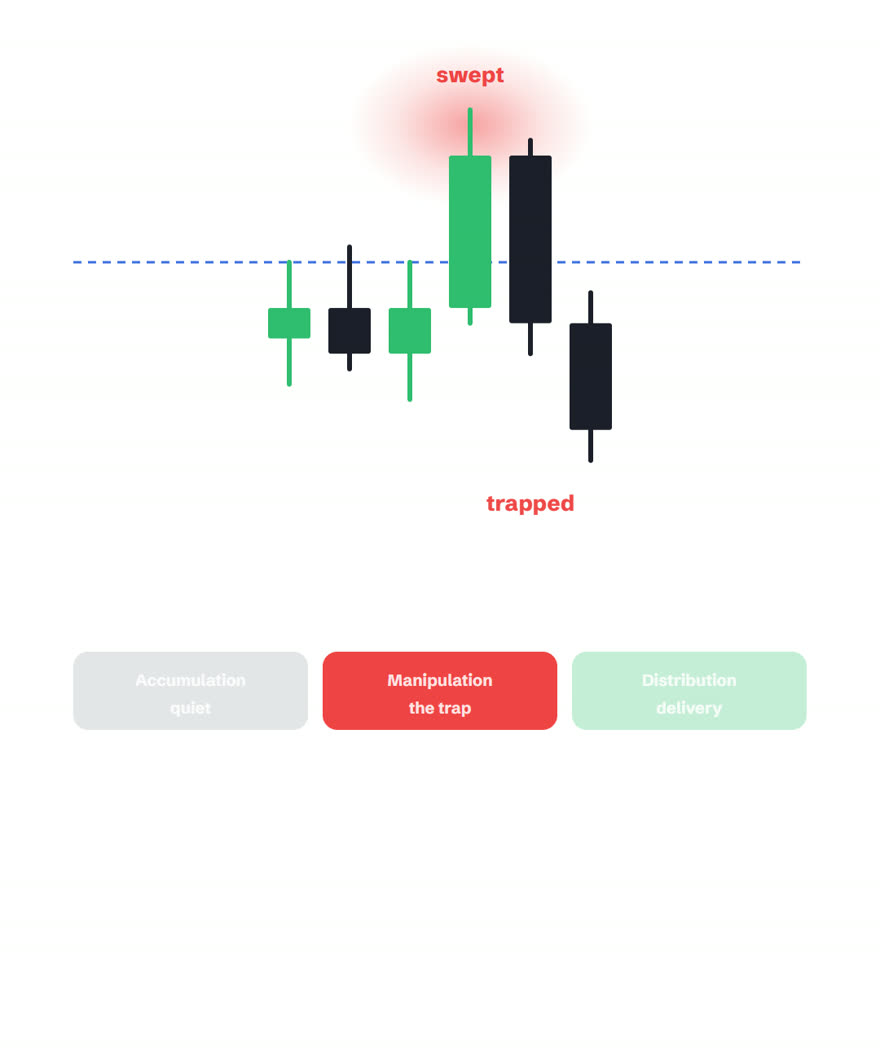
Then comes the nasty part. Price finally breaks the range, and it looks exactly like the breakout everyone was waiting for. Buyers pile in above the high. And that is the point: the big players need those orders to fill their own positions on the other side. Price sweeps the level, collects everything, and reverses hard. The breakout traders are trapped, and their stop losses become fuel for the move against them.
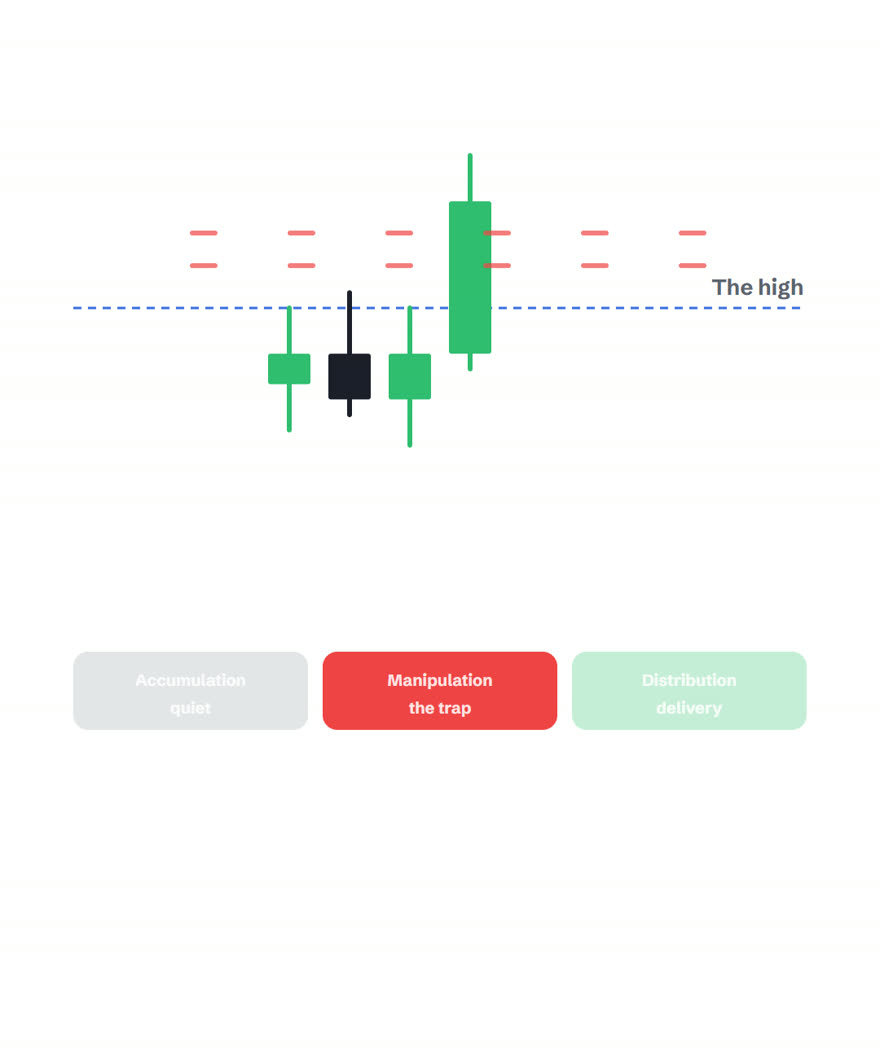
This is not conspiracy talk, it is order-flow mechanics. Large positions can only be filled where resting orders are dense, and orders cluster beyond obvious levels. So price gets pushed to where the orders are. Hence the rule: the first break of a range is a trap until proven otherwise.
Phase 3: Distribution, the delivery
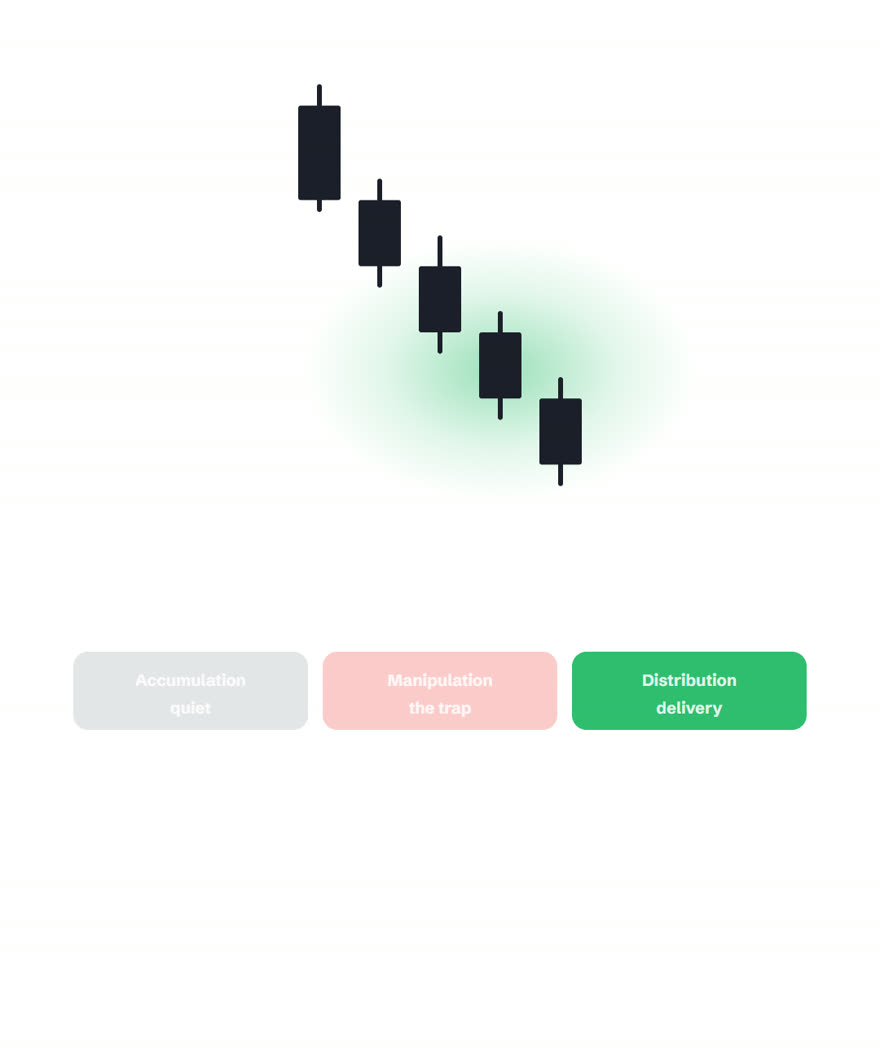
Once the stops are collected, the real move delivers, in the opposite direction to the manipulation. This is the expansion phase, the one with the clean candles and the follow-through, and it usually travels much further than the fake move did. Everything about AMD trading is about being positioned for this phase instead of being fuel for it.
AMD inside the sessions and across timeframes
On session-driven markets the three phases map onto the clock: the Asian session builds the accumulation range, the London open provides the manipulation (the famous Judas swing that sweeps the Asian high or low), and New York delivers the distribution. Look at a daily candle after a trending day: the wick is London's manipulation, the body is New York's delivery.
AMD is also fractal: the same cycle prints on the 1 minute, the 15 minute and the daily. Use the higher timeframe to know which phase the market is in, and the lower timeframe to time your entry inside it. If the daily just swept a major low and reversed, daily distribution is pointing up, so you drop to the 15 minute and hunt a small AMD cycle in that same direction. Never fight the bigger phase.
The entry: three confirmations, in order
- 1. The sweep: price takes out an obvious level, the range high or low, and closes back inside. That is manipulation completing
- 2. The shift: price breaks structure in the opposite direction with displacement, an expansive candle that leaves a fair value gap behind
- 3. The retrace: price returns into that gap. That is the entry, not the chase
Stop: beyond the manipulation extreme, because if price trades back through the sweep, the idea is wrong. Target: at least 2 to 1, aimed at the liquidity on the other side of the range. No sweep, no shift, no retrace: no trade.
One honest note for synthetics traders
The session mapping applies to forex, gold and index CFDs. Deriv's synthetic indices run on a random number generator 24/7, so there is no London open and no session AMD there. But the chart mechanic itself, sweep, shift, retrace, prints on synthetics constantly, and it is exactly the entry we teach. Trade the pattern, not the clock.
Practise it before you trade it
The free AMD entry trainer plays this exact cycle candle by candle and scores whether you bought the trap or waited for the confirmation. Drill it there, run every live setup through the pre-trade checklist, and if candles and structure are still new, start with the free beginner course. Then take 20 demo trades before any real money touches the market.
Try trading free, $10,000 virtual demo →Frequently asked questions
What does AMD mean in trading?
What is the manipulation phase or Judas swing?
How does AMD map onto trading sessions?
What confirmations do I need to enter an AMD trade?
Does AMD work on Deriv synthetic indices?
How can I practise spotting AMD for free?

Keep learning
New to trading entirely? Start with the free beginner course: 20 short lessons from zero to your first demo trade.